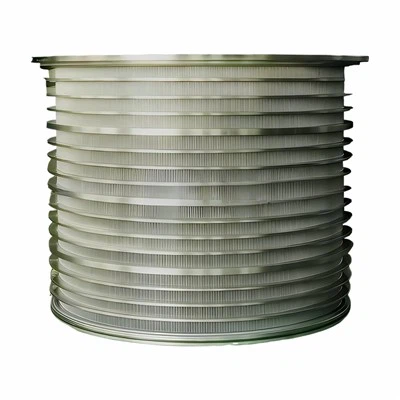
In the realm of pulp and paper processing, the choice of heat disperser can significantly impact the efficiency, quality, and cost - effectiveness of the production process. As a Disc Heat - Disperser supplier, I am excited to share the numerous advantages that this equipment offers when compared to other heat dispersers.
1. Superior Dispersion Performance
One of the most prominent advantages of the Disc Heat - Disperser is its exceptional dispersion performance. The disc - based design of this heat disperser allows for a more intensive and uniform treatment of the pulp. Unlike some other heat dispersers that may rely on less efficient mechanical or thermal methods, the Disc Heat - Disperser uses a series of rotating discs to generate high shear forces. These shear forces break down agglomerates, contaminants, and fiber bundles in the pulp.
For example, in a traditional pulp and paper mill, there are often various impurities such as ink particles, stickies, and pitch that can affect the quality of the final paper product. The Disc Heat - Disperser can effectively disperse these contaminants into extremely fine particles, which are then more easily removed during subsequent processing steps. This results in a cleaner and more uniform pulp, leading to higher - quality paper with fewer defects.
In contrast, some other heat dispersers may not be able to generate the same level of shear forces, leaving behind larger agglomerates and contaminants in the pulp. This can lead to issues such as uneven paper formation, reduced strength, and increased breakage during the paper - making process.
2. Energy Efficiency
Energy consumption is a major concern in the pulp and paper industry. The Disc Heat - Disperser offers significant energy - saving benefits compared to other heat dispersers. The design of the disc system allows for a more efficient transfer of energy from the mechanical drive to the pulp.
The high - speed rotation of the discs creates a turbulent flow within the pulp, which maximizes the heat transfer and dispersion efficiency. This means that less energy is wasted in the form of heat loss or inefficient mechanical movement. Additionally, the Disc Heat - Disperser can operate at relatively lower temperatures and pressures compared to some other heat dispersers while still achieving the same or better dispersion results.
For instance, some older - style heat dispersers may require high - pressure steam injection to achieve the necessary heat and dispersion, which consumes a large amount of energy. In contrast, the Disc Heat - Disperser can use a more optimized mechanical approach, reducing the overall energy demand of the process. This not only saves on energy costs but also makes the production process more environmentally friendly.
3. Versatility and Adaptability
The Disc Heat - Disperser is highly versatile and can be adapted to a wide range of pulp and paper processing applications. It can handle different types of pulp, including hardwood, softwood, and recycled pulp. This adaptability is crucial in the modern pulp and paper industry, where mills often need to process a variety of raw materials to meet market demands.
Whether it is for producing high - quality printing paper, packaging materials, or specialty papers, the Disc Heat - Disperser can be customized to suit the specific requirements of each application. For example, the disc configuration, rotational speed, and operating conditions can be adjusted to optimize the dispersion process for different pulp qualities and production volumes.
On the other hand, some other heat dispersers may be more limited in their application scope. They may be designed specifically for a particular type of pulp or a narrow range of processing conditions, which can restrict the flexibility of the production process.
4. Low Maintenance Requirements
Maintenance is an important factor in the long - term operation of any industrial equipment. The Disc Heat - Disperser has relatively low maintenance requirements compared to other heat dispersers. The design of the disc system is simple and robust, with fewer moving parts that are prone to wear and tear.
The discs are made of high - quality materials that can withstand the high - shear forces and abrasive nature of the pulp. This reduces the frequency of disc replacement and other maintenance tasks. Additionally, the easy - access design of the Disc Heat - Disperser allows for quick and convenient inspection and cleaning, minimizing downtime during maintenance.
In contrast, some other heat dispersers may have complex mechanical or hydraulic systems that require more frequent maintenance and repairs. These systems can be difficult to access and service, leading to longer downtime and higher maintenance costs.
5. Integration with Existing Systems
As a Disc Heat - Disperser supplier, I understand the importance of seamless integration with existing pulp and paper processing systems. The Disc Heat - Disperser can be easily integrated into a variety of production lines, whether it is a new installation or an upgrade to an existing system.
It can be connected to other equipment such as Paper Machine Kneader and refiners to form a comprehensive pulp - processing system. This integration allows for a more efficient and continuous production process, with better control over the pulp quality and processing parameters.
Some other heat dispersers may have compatibility issues when trying to integrate them into existing systems. They may require significant modifications to the production line or additional equipment to function properly, which can increase the overall cost and complexity of the integration process.


6. Improved Product Quality
The superior dispersion performance of the Disc Heat - Disperser directly translates into improved product quality. By effectively breaking down contaminants and fiber bundles, the pulp becomes more uniform in terms of fiber length, distribution, and cleanliness. This results in paper products with better strength, smoothness, and printability.
For example, in the production of high - end printing paper, the uniform dispersion of fibers and removal of contaminants ensure that the paper has a consistent surface finish and excellent ink receptivity. This leads to sharper and more vibrant printed images, meeting the high - quality standards of the printing industry.
In comparison, other heat dispersers that do not provide the same level of dispersion may produce paper with uneven surfaces, reduced strength, and poor print quality, which can limit the marketability of the final product.
7. Cost - Effectiveness
When considering the overall cost of ownership, the Disc Heat - Disperser offers significant cost - effectiveness. The combination of energy efficiency, low maintenance requirements, and improved product quality results in long - term cost savings.
The reduced energy consumption lowers the operating costs, while the low maintenance frequency reduces the maintenance expenses. Additionally, the improved product quality can lead to higher selling prices and increased market competitiveness, offsetting the initial investment in the Disc Heat - Disperser.
In contrast, other heat dispersers may have higher operating and maintenance costs, and may not be able to produce products of the same quality, which can negatively impact the profitability of the pulp and paper mill.
Conclusion
In conclusion, the Disc Heat - Disperser offers a multitude of advantages over other heat dispersers in terms of dispersion performance, energy efficiency, versatility, maintenance requirements, integration capabilities, product quality, and cost - effectiveness. As a Disc Heat - Disperser supplier, I am confident that this equipment can provide significant benefits to pulp and paper mills of all sizes.
If you are interested in learning more about how the Disc Heat - Disperser can improve your pulp and paper production process, or if you are considering a purchase, I encourage you to contact us for a detailed consultation. We are committed to providing you with the best solutions and support to meet your specific needs.
References
- "Pulp and Paper Technology Handbook", Third Edition, by George A. Smook.
- "Advances in Pulp and Paper Processing", edited by John N. Sadler.
- Industry reports on pulp and paper processing equipment efficiency and performance.