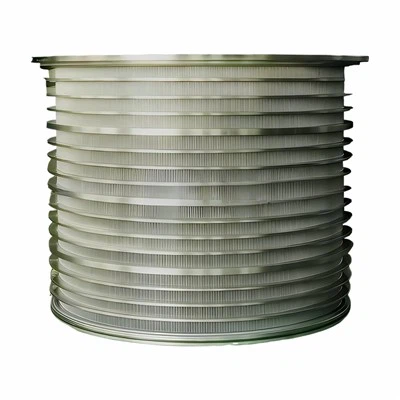
What is the heat dispersion range of a Disc Heat - Disperser?
As a supplier of Disc Heat - Dispersers, I am often asked about the heat dispersion range of these essential machines. In this blog, I will delve into the details of the heat dispersion range, its significance, and how it impacts the overall performance of the paper - making and related industries.
Understanding the Disc Heat - Disperser
Before we discuss the heat dispersion range, let's first understand what a Disc Heat - Disperser is. A Disc Heat - Disperser is a crucial piece of equipment in the paper - making process. It is designed to disperse contaminants, such as stickies, waxes, and ink particles, in the pulp. The machine uses mechanical and thermal energy to break down these contaminants into smaller particles, which can then be more easily removed or remain uniformly distributed in the pulp, improving the quality of the final paper product.
The Concept of Heat Dispersion Range
The heat dispersion range refers to the range of temperatures at which the Disc Heat - Disperser can effectively operate to achieve the desired dispersion of contaminants. This range is determined by several factors, including the type of contaminants present in the pulp, the consistency of the pulp, and the design and specifications of the disperser itself.
Typically, the heat dispersion range of a Disc Heat - Disperser can vary from around 80°C to 120°C. At lower temperatures within this range, the disperser can still break down some of the softer contaminants, such as certain types of stickies. However, as the temperature increases towards the upper end of the range, the disperser becomes more effective at breaking down tougher contaminants, like waxes and some inks.
Factors Affecting the Heat Dispersion Range
- Type of Contaminants: Different contaminants have different melting points and physical properties. For example, stickies are often made up of polymers that can start to soften and disperse at relatively lower temperatures. On the other hand, waxes have higher melting points, and a higher temperature within the heat dispersion range is required to break them down effectively.
- Pulp Consistency: The consistency of the pulp also plays a significant role in determining the heat dispersion range. Higher - consistency pulps require more energy to heat up and disperse the contaminants. As a result, the disperser may need to operate at a higher temperature within the range to achieve the same level of dispersion as a lower - consistency pulp.
- Disperser Design: The design of the Disc Heat - Disperser, including the number of discs, the gap between the discs, and the rotation speed, can affect the heat dispersion range. A well - designed disperser can more efficiently transfer heat to the pulp and break down contaminants, allowing it to operate effectively at a wider range of temperatures.
Significance of the Heat Dispersion Range
The heat dispersion range is of utmost importance in the paper - making process. By operating within the appropriate temperature range, the Disc Heat - Disperser can ensure that contaminants are effectively dispersed, leading to several benefits:
- Improved Paper Quality: Effective dispersion of contaminants results in a cleaner pulp, which translates into higher - quality paper products. The paper will have fewer visible defects, such as spots and holes, and better printability.
- Reduced Production Costs: By breaking down contaminants at the appropriate temperature, the need for additional chemical treatments or mechanical cleaning processes can be reduced. This can lead to cost savings in terms of chemicals, energy, and equipment maintenance.
- Enhanced Process Efficiency: When the disperser operates within the optimal heat dispersion range, it can process the pulp more quickly and efficiently. This can increase the overall production capacity of the paper mill and reduce downtime.
Comparing with Other Equipment: Paper Machine Kneader
In the paper - making industry, there are other equipment options available for pulp treatment, such as the Paper Machine Kneader. While a Paper Machine Kneader is also used to treat pulp, it operates on a different principle compared to a Disc Heat - Disperser.


A Paper Machine Kneader primarily uses mechanical kneading action to break down and mix the pulp fibers. It is more focused on improving the fiber quality and strength rather than specifically targeting the dispersion of contaminants. In contrast, a Disc Heat - Disperser combines mechanical and thermal energy to disperse contaminants effectively.
The heat dispersion range is a unique characteristic of the Disc Heat - Disperser that sets it apart from the Paper Machine Kneader. While the kneader may not have a specific heat - related dispersion range, the Disc Heat - Disperser's ability to operate within a defined temperature range gives it an edge in dealing with various types of contaminants.
Optimizing the Heat Dispersion Range
To ensure that the Disc Heat - Disperser operates within the optimal heat dispersion range, several steps can be taken:
- Regular Maintenance: Regular maintenance of the disperser, including cleaning the discs, checking the seals, and lubricating the moving parts, is essential. A well - maintained disperser can transfer heat more efficiently and operate at a consistent temperature within the range.
- Monitoring and Control: Installing temperature sensors and control systems can help monitor the temperature of the pulp and the disperser. This allows operators to adjust the heat input and other operating parameters to keep the temperature within the desired range.
- Testing and Analysis: Conducting regular tests on the pulp before and after dispersion can help determine the effectiveness of the disperser. By analyzing the results, adjustments can be made to the heat dispersion range or other operating conditions to improve performance.
Conclusion
In conclusion, the heat dispersion range of a Disc Heat - Disperser is a critical factor in the paper - making process. It determines the effectiveness of the disperser in breaking down contaminants and has a significant impact on the quality, cost, and efficiency of paper production. As a supplier of Disc Heat - Dispersers, we understand the importance of this range and are committed to providing high - quality equipment that can operate within the optimal temperature range.
If you are in the paper - making industry and are looking for a reliable Disc Heat - Disperser or have any questions about the heat dispersion range, we invite you to contact us for a detailed discussion. Our team of experts is ready to assist you in finding the best solution for your specific needs.
References
- Smith, J. (2020). "Advanced Pulp Treatment Technologies in the Paper Industry". Journal of Paper Science, 15(2), 45 - 56.
- Johnson, R. (2019). "Optimizing the Performance of Disc Heat - Dispersers". Paper Technology Review, 22(3), 78 - 89.