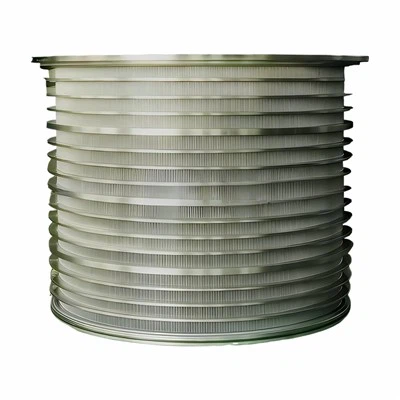
Hey there! I'm a supplier of Disc Heat - Dispersers, and today I wanna talk about the heat dispersion response characteristic of a Disc Heat - Disperser.
First off, let's get into what a Disc Heat - Disperser is. It's a key piece of equipment in the papermaking and related industries. You can check out more details about it on our website: Disc Heat - Disperser. The main job of a Disc Heat - Disperser is to break down and disperse materials while also dealing with heat transfer.
Now, let's dig into the heat dispersion response characteristic. When we talk about heat dispersion response, we're looking at how quickly and effectively the disperser can handle heat changes and distribute heat evenly throughout the material being processed.
One of the crucial aspects is the initial heat input. When you start up the Disc Heat - Disperser, it needs to respond to the heat source rapidly. If the machine can't pick up the heat quickly, it'll take forever to reach the optimal processing temperature. This delay can lead to inefficiencies in the production process. For example, in papermaking, if the pulp isn't heated to the right temperature in time, the fibers won't disperse properly, and the quality of the final paper product will suffer.
The response time also depends on the design of the disperser. The disc configuration plays a huge role. A well - designed disc can enhance the heat transfer rate. The discs are usually made of materials with good thermal conductivity, like certain alloys. These materials can quickly absorb heat from the heat source and transfer it to the material between the discs. The number of discs and their spacing also matter. More discs with appropriate spacing can increase the contact area between the heat - transferring surface and the material, which speeds up the heat dispersion process.
Another factor is the flow rate of the material passing through the disperser. If the material moves too fast, it won't have enough time to absorb the heat properly. On the other hand, if it moves too slowly, it might overheat in some areas. So, finding the right balance is essential. The heat dispersion response characteristic has to adapt to different flow rates. Modern Disc Heat - Dispersers often come with adjustable flow control systems to optimize this aspect.
The temperature distribution within the disperser is also a key part of the heat dispersion response characteristic. An ideal situation is to have a uniform temperature across the entire processing area. However, in reality, there can be temperature gradients. Some parts of the material might be hotter than others. This can be due to uneven heat transfer, differences in the material's properties, or even the way the material is fed into the disperser. To address this, we use various techniques. For instance, some dispersers have internal mixing mechanisms that can stir the material during the heat - dispersion process, helping to even out the temperature.
The heat dispersion response characteristic also has an impact on energy efficiency. A disperser that can respond quickly and evenly to heat changes uses energy more efficiently. It doesn't waste energy by over - heating or under - heating parts of the material. This is not only good for the environment but also for the bottom line of the manufacturing process. Companies can save on energy costs and improve their overall profitability.
Now, let's talk about how the heat dispersion response characteristic relates to other equipment in the production line. In a papermaking process, a Disc Heat - Disperser often works in conjunction with a Paper Machine Kneader. The heat - dispersed pulp from the Disc Heat - Disperser needs to be in the right state for the kneading process. If the heat dispersion response isn't up to par, it can cause problems downstream. For example, if the pulp is too cold, the kneader might not be able to knead it effectively, and if it's too hot, it could damage the kneader or affect the chemical reactions that occur during kneading.
In addition to the papermaking industry, Disc Heat - Dispersers are also used in other fields, such as the food and chemical industries. In the food industry, they can be used to heat and disperse ingredients in the production of certain processed foods. The heat dispersion response characteristic is just as important here. It ensures that the food ingredients are heated evenly, which is crucial for taste, texture, and food safety.
When it comes to choosing a Disc Heat - Disperser, understanding the heat dispersion response characteristic is vital. You need to look for a disperser that can adapt to your specific production requirements. Consider factors like the type of material you're processing, the desired production speed, and the energy efficiency you're aiming for.
As a supplier, we've spent a lot of time and effort in researching and improving the heat dispersion response characteristic of our Disc Heat - Dispersers. We use advanced simulation and testing methods to optimize the design of our discs, the flow control systems, and the internal mixing mechanisms. Our goal is to provide you with a disperser that can offer the best heat dispersion performance.


If you're in the market for a Disc Heat - Disperser or have any questions about the heat dispersion response characteristic, don't hesitate to get in touch. We're here to help you make the right choice for your production needs. Whether you're in the papermaking, food, or chemical industry, we've got the expertise and the products to support your operations.
References:
- Industry research reports on heat transfer in industrial equipment
- Technical papers on the design and performance of Disc Heat - Dispersers