Surfactants play a crucial and multifaceted role in dispersing systems, and as a supplier of dispersing systems, I am well - versed in understanding and leveraging these functions. In this blog, I will delve into the significance of surfactants in dispersing systems, exploring their various roles and how they contribute to the overall performance of these systems.
Understanding Dispersing Systems
Before discussing the role of surfactants, it is essential to understand what dispersing systems are. A dispersing system consists of a dispersed phase and a continuous phase. The dispersed phase is made up of small particles or droplets that are distributed throughout the continuous phase. For example, in an oil - in - water emulsion, the oil droplets are the dispersed phase, and water is the continuous phase. The goal of a dispersing system is to maintain the stability of the dispersed phase, preventing the particles or droplets from aggregating and settling out.
Role of Surfactants in Dispersing Systems
1. Reduction of Surface and Interfacial Tensions
One of the primary roles of surfactants in dispersing systems is to reduce the surface and interfacial tensions. Surface tension is the force that acts on the surface of a liquid, causing it to behave like a stretched elastic membrane. Interfacial tension exists at the interface between two immiscible phases, such as oil and water.
Surfactants are amphiphilic molecules, meaning they have both a hydrophilic (water - loving) head and a hydrophobic (water - hating) tail. When added to a dispersing system, the hydrophilic head of the surfactant molecule is attracted to the continuous phase (usually water), while the hydrophobic tail is attracted to the dispersed phase (such as oil). This arrangement reduces the surface and interfacial tensions, making it easier to disperse the particles or droplets in the continuous phase.
For instance, in a paint formulation, surfactants help to disperse pigments in the liquid medium. By reducing the surface tension of the paint, the pigments can be evenly distributed, resulting in a smooth and uniform finish.
2. Stabilization of the Dispersed Phase
Surfactants also play a crucial role in stabilizing the dispersed phase. Once the particles or droplets are dispersed in the continuous phase, they tend to aggregate due to van der Waals forces and other attractive forces. Surfactants prevent this aggregation by forming a protective layer around the dispersed particles or droplets.
This protective layer can be electrostatic or steric in nature. In electrostatic stabilization, the surfactant molecules adsorb onto the surface of the dispersed particles, giving them a net charge. The like - charged particles then repel each other, preventing aggregation. In steric stabilization, the surfactant molecules form a physical barrier around the particles, preventing them from coming into close contact and aggregating.
In a pharmaceutical suspension, surfactants are used to stabilize the drug particles in the liquid medium. This ensures that the drug remains uniformly dispersed, providing consistent dosing.
3. Improvement of Wetting
Wetting is the process by which a liquid spreads over a solid surface. Surfactants can improve the wetting properties of a liquid in a dispersing system. By reducing the surface tension of the liquid, surfactants allow it to spread more easily over the surface of the solid particles.
This is particularly important in applications such as detergency. In a laundry detergent, surfactants help the water to wet the fabric fibers, allowing the detergent to penetrate and remove dirt and stains more effectively.
4. Emulsification
Surfactants are essential for the formation and stabilization of emulsions. An emulsion is a type of dispersing system in which one liquid is dispersed as droplets in another immiscible liquid. For example, mayonnaise is an oil - in - water emulsion, where oil droplets are dispersed in water.
Surfactants act as emulsifiers by reducing the interfacial tension between the two immiscible liquids and forming a stable film around the droplets. This film prevents the droplets from coalescing and separating into two distinct layers.
In the food industry, surfactants are used to create stable emulsions in products such as salad dressings and ice cream.


Our Dispersing Systems and the Use of Surfactants
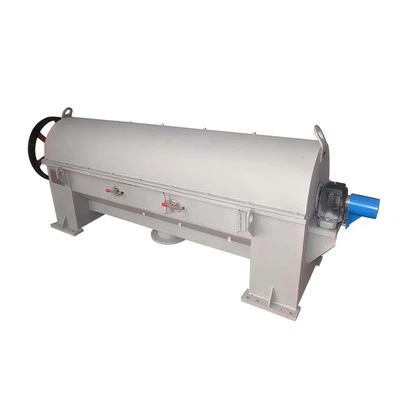
As a supplier of dispersing systems, we understand the importance of surfactants in achieving optimal performance. Our Paper Machine Kneader and Disc Heat - Disperser are designed to work in conjunction with surfactants to provide efficient and effective dispersion.
In our Paper Machine Kneader, surfactants are used to improve the dispersion of fibers and fillers in the paper - making process. By reducing the surface tension of the water, the fibers and fillers can be more easily dispersed, resulting in a more uniform paper sheet.
Our Disc Heat - Disperser also benefits from the use of surfactants. In this system, surfactants help to disperse and break down contaminants in the pulp, improving the quality of the final paper product.
Contact Us for Your Dispersing System Needs
If you are in the market for a high - quality dispersing system, we are here to help. Our team of experts can provide you with detailed information about our products and how they can meet your specific requirements. Whether you need a system for the paper industry, food industry, or any other application, we have the solutions you need.
We invite you to contact us to discuss your dispersing system needs. Our sales team will be happy to provide you with a quote and answer any questions you may have.
References
- Rosen, Milton J., and Dennis L. Smith. Surfactants and Interfacial Phenomena. John Wiley & Sons, 2012.
- Myers, Donald M. Surfactant Science and Technology. Wiley - Interscience, 2006.
- Paul, Sudip, and Jayant K. Singh. Emulsions: Fundamentals and Applications in the Food Industry. Springer, 2014.