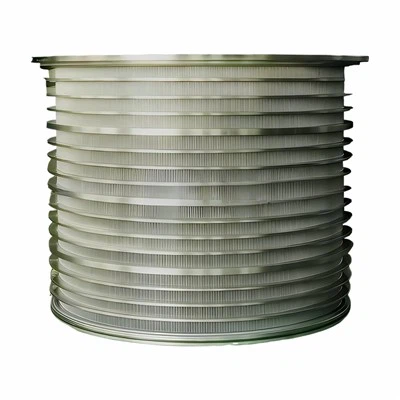
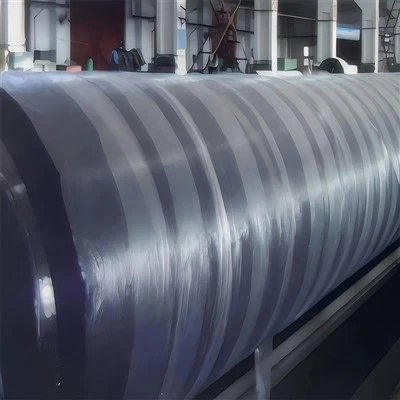
A disc thickener is a crucial piece of equipment in the pulp and paper industry, primarily used for dewatering and thickening pulp suspensions. As a supplier of disc thickeners, I am well - versed in its working principle and advantages. In this blog, I will delve into the details of how a disc thickener operates.
1. Introduction to the Disc Thickener
The disc thickener is a high - efficiency thickening device that has been widely adopted in pulp and paper mills around the world. Compared with other thickening equipment such as the Gravity Cylinder Thickener Ⅱ and the Inclined Screw Thickenner, the disc thickener offers better thickening performance and higher processing capacity. Its structure mainly consists of a drive unit, a thickening disc assembly, a frame, a pulp inlet, a filtrate outlet, and a thickened pulp outlet.
2. The Basic Working Principle
The working process of a disc thickener can be divided into several key steps: pulp feeding, filtration, and pulp discharge.
Pulp Feeding
The pulp suspension, which usually has a low consistency (around 0.5% - 3%), is pumped into the thickener through the pulp inlet. The pulp is evenly distributed across the thickening discs by a special distribution device. This even distribution is crucial as it ensures that each part of the disc participates in the thickening process effectively, maximizing the overall efficiency of the thickener.
Filtration
The heart of the disc thickener's operation lies in the filtration process, which occurs on the surface of the thickening discs. Each thickening disc is made up of a series of filter elements. As the pulp suspension comes into contact with the filter elements, the filtrate (mostly water) is forced through the filter media due to the pressure difference created by the rotation of the discs and the design of the thickener.
The filter media is carefully selected to have appropriate pore sizes. These pores allow water to pass through while retaining the pulp fibers. The pressure difference can be generated in multiple ways. In some disc thickeners, the rotation of the discs creates a centrifugal force that helps to push the water through the filter media. In other designs, a vacuum system may be employed to enhance the filtration process. As the water is removed, the pulp fibers accumulate on the surface of the filter elements, gradually forming a thick layer of pulp.
The filtration efficiency is affected by several factors. The properties of the pulp, such as the fiber length, fiber type, and consistency, play a significant role. Longer fibers may form a more porous mat on the filter surface, allowing for better water drainage. The operating conditions, including the rotational speed of the discs, the vacuum level (if applicable), and the temperature of the pulp suspension, also impact the filtration rate. For example, a higher rotational speed can increase the centrifugal force and thus speed up the water removal process, but it may also cause excessive wear on the filter elements.
Pulp Discharge
Once the pulp has reached the desired consistency (usually in the range of 8% - 15%), it is scraped off the surface of the thickening discs by a set of scrapers. The scrapers are designed to be in close contact with the disc surface to ensure complete removal of the thickened pulp. The thickened pulp then moves towards the thickened pulp outlet and is discharged from the thickener.
3. Advantages of the Disc Thickener
The disc thickener offers several advantages over other thickening equipment in the market.
High Efficiency
Due to its large filtration area provided by the multiple thickening discs, the disc thickener can process a large volume of pulp in a relatively short time. This high - throughput capacity makes it suitable for large - scale pulp and paper production plants.
Good Thickening Performance
It can achieve a significant increase in pulp consistency with high reliability. The thickened pulp has a more uniform consistency, which is beneficial for subsequent processing steps such as pulp washing and papermaking.
Low Energy Consumption
Compared with some other thickening technologies, the disc thickener generally consumes less energy. The design of the thickening discs and the efficient filtration process minimize the energy required for dewatering.

Easy Maintenance
The structure of the disc thickener is relatively simple, and the filter elements can be easily replaced or cleaned. This reduces the downtime for maintenance and ensures continuous operation of the thickener.
4. Applications of the Disc Thickener
The disc thickener is mainly used in the pulp and paper industry. It is an essential part of the pulp preparation process, where it helps to remove excess water from the pulp suspension before further processing. It can be used for thickening various types of pulp, including chemical pulp, mechanical pulp, and recycled pulp.
In addition to the pulp and paper industry, the disc thickener also has potential applications in other industries where solid - liquid separation is required. For example, it can be used in the wastewater treatment industry to thicken sludge, reducing the volume of sludge for easier disposal.
5. Comparison with Other Thickening Equipment
As mentioned earlier, there are other thickening equipment available in the market, such as the Gravity Cylinder Thickener Ⅱ and the Inclined Screw Thickenner.
The Gravity Cylinder Thickener Ⅱ relies on gravity for dewatering. It has a relatively simple structure and is suitable for applications where a low - cost and low - efficiency thickening solution is required. However, its thickening capacity is limited, and it may not be able to achieve a high pulp consistency as effectively as a disc thickener.
The Inclined Screw Thickenner uses a screw conveyor to transport and thicken the pulp. It is more suitable for thickening pulp with a relatively high initial consistency. However, it may have issues with fiber entanglement and uneven thickening, which the disc thickener can avoid due to its uniform filtration process.
6. Technical Improvements and Future Trends
With the development of technology, the disc thickener has also undergone continuous improvements. New materials for filter elements are being developed to improve filtration efficiency and reduce wear. Advanced control systems are being integrated into the thickener to optimize the operating parameters in real - time, ensuring better performance and energy savings.
In the future, we can expect further improvements in the design of the disc thickener. For example, more energy - efficient drive systems may be developed, and the thickener may be made more compact and modular for easier installation and operation. There may also be an increased focus on environmental friendliness, such as reducing the use of chemicals in the filtration process and improving the recyclability of the thickened pulp.
7. Conclusion and Invitation
In conclusion, the disc thickener is a highly efficient and reliable thickening equipment with a well - defined working principle. Its advantages in terms of high throughput, good thickening performance, low energy consumption, and easy maintenance make it a popular choice in the pulp and paper industry and other related fields.

If you are interested in our Disc Thickener or have any questions about its working principle, application, or technical details, please feel free to contact us. We are more than willing to provide you with detailed information and solutions tailored to your specific needs. Let's work together to achieve better results in your production process.

References
- "Pulp and Paper Manufacturing Technology" by G. A. Smook
- Industry reports on pulp and paper equipment from relevant research institutions.